
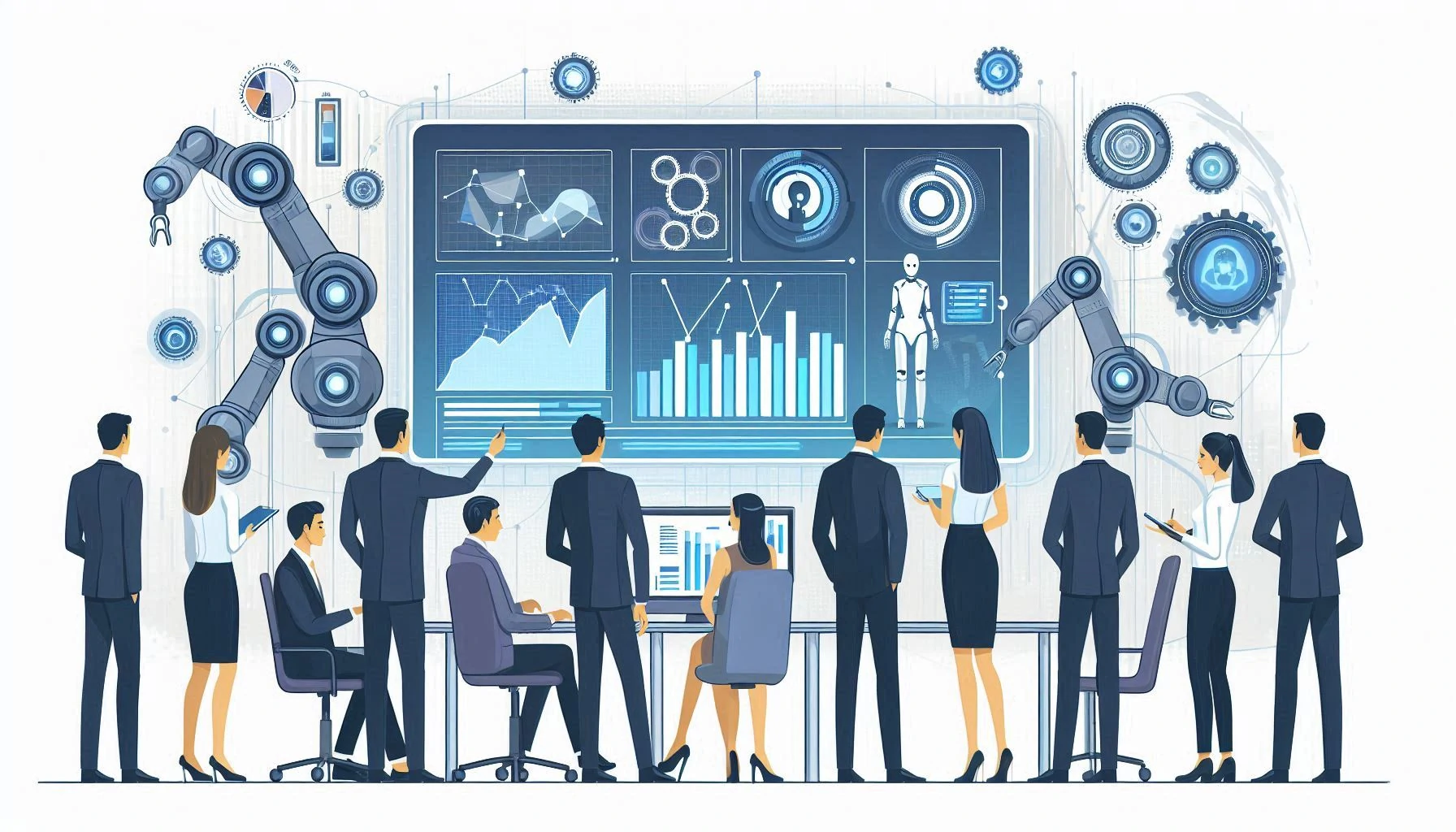
Benefits of Integrating AI into Business Operations
Artificial Intelligence (AI) offers numerous benefits that can enhance business operations and drive growth. In this chapter we present the business case for AI. Here are some key advantages:
- Increased Efficiency: AI automates repetitive tasks, freeing up human resources to focus on strategic work. This not only speeds up processes but also reduces the likelihood of errors.
- Enhanced Decision Making: AI-powered analytics can process vast amounts of data quickly, providing insights that support informed decision-making. This capability helps businesses respond more effectively to market changes.
- Improved Customer Experience: AI can personalize interactions and predict customer needs, leading to higher satisfaction and loyalty. For instance, chatbots provide instant customer support, while recommendation systems tailor content to individual preferences.
- Cost Reduction: By automating processes and optimizing operations, AI can significantly lower operational costs. For example, AI can reduce the need for manual labor in data entry tasks, thereby cutting labor costs.
- Innovation Acceleration: AI helps businesses identify new opportunities for growth. By analyzing trends and patterns, AI can drive innovation in products and services, giving companies a competitive edge.
- Predictive Maintenance: In industries reliant on equipment, AI can predict when maintenance is needed, thus reducing downtime and avoiding costly repairs. This proactive approach keeps operations running smoothly.
- Risk Management: AI can analyze patterns to detect fraud, cybersecurity threats, and other risks more effectively than traditional methods. This ability enhances security and minimizes potential losses.
Case Studies of Successful AI Implementation
To illustrate AI’s real-world impact, consider these examples:
- Netflix: Personalized Recommendations Netflix uses AI algorithms to analyze viewing habits and suggest personalized content. This approach has significantly improved user engagement and reduced churn, solidifying Netflix’s position as a leader in the streaming industry.
- Walmart: Supply Chain Optimization Walmart implemented AI to optimize its supply chain. By predicting demand, managing inventory, and improving delivery routes, Walmart reduced waste, lowered costs, and improved product availability, leading to more efficient operations.
- JPMorgan Chase: Fraud Detection JPMorgan Chase uses an AI system called COiN (Contract Intelligence) to review commercial loan agreements. This system reviews documents in seconds—a task that would take lawyers 360,000 hours annually. As a result, the bank has dramatically improved efficiency and accuracy.
- Starbucks: Predictive Analytics Starbucks employs AI to analyze data from its loyalty program, mobile app, and other sources. By doing so, Starbucks personalizes marketing offers and predicts customer preferences, which has led to increased sales and higher customer satisfaction.
Common Misconceptions about AI in Business
Despite its potential, several misconceptions about AI can hinder its adoption:
- “AI Will Replace Human Workers”: While AI automates certain tasks, it often creates new roles and enhances human capabilities. Rather than replacing workers, AI frequently leads to more efficient collaboration between humans and machines.
- “AI is Only for Large Tech Companies”: AI solutions are increasingly accessible and can benefit businesses of all sizes. Companies in various industries—from retail to healthcare—are already leveraging AI to enhance operations and customer experiences.
- “AI Requires Massive Amounts of Data”: While more data can improve AI performance, many AI applications can function effectively with smaller, well-curated datasets. Businesses can start with the data they have and scale as needed.
- “AI is Too Complex to Implement”: The rise of AI-as-a-Service platforms and pre-trained models has simplified AI implementation. Many businesses can now deploy AI without needing deep technical expertise.
- “AI Decisions are Always Correct”: AI systems can make errors and may reflect biases present in training data. Human oversight and ethical considerations are crucial to ensure AI systems make fair and accurate decisions.
- “AI is a Magic Solution for All Problems”: AI is a powerful tool, but it’s not a one-size-fits-all solution. Businesses must carefully identify the use cases where AI can add real value and approach implementation with a clear strategy.
By understanding these benefits, learning from successful implementations, and dispelling common myths, businesses can build a strong case for AI adoption. The key is to align AI initiatives with specific business goals and approach implementation strategically. As we proceed in this guide, we’ll explore how to identify the right opportunities for AI in your organization and develop a tailored strategy for successful integration.